


Honda CR-X Si

A Honda CRX parked by a stormy ocean, highlighting its taillight against the gloomy seascape.

Honda's Mission

The Honda CR-X was engineered around a lightweight, efficiency-first philosophy that prioritized balance and responsiveness over raw power. With curb weights often under 2,000 lbs and a compact wheelbase, the CR-X delivered sharp handling and immediate driver feedback, making it feel agile and alive in ways many heavier, more powerful cars could not match.

The evolution of the CR-X also brought more advanced engine technology and the introduction of the DOHC VTEC B16A engine. This marked a turning point, blending high-revving performance with everyday usability. By the early 1990s, the CR-X had firmly established itself as a benchmark for lightweight front-wheel-drive performance.

The History

Performace

CR-X performance is defined more by its strong power-to-weight ratio than outright horsepower. Its lightweight design made even modest engines feel responsive, while Si and SiR models added fuel injection and high-revving performance. Low mass, short gearing, and precise steering made it especially capable in tight, technical driving situations.

Technology

A key technological advancement in the CR-X was the second generation’s four-wheel double wishbone suspension, which improved tire contact and reduced body movement during cornering. Honda’s PGM-FI fuel injection boosted throttle response and efficiency, while later VTEC engines added variable valve timing for better performance across the rev range.

Legacy

The CR-X earned its reputation as one of the most influential sport-compact cars of its era by proving that lightweight engineering and smart design could outperform larger, more powerful competitors in real-world driving. Its success helped shape Honda’s performance identity and laid the groundwork for future enthusiast models, while its simplicity and reliability continue to make it a favorite among tuners and collectors.

The CR-X debuted in 1983 as a sport-compact off the Civic platform, with a strong focus on lightweight design and aerodynamic efficiency. Early models used simple construction and small engines to deliver excellent fuel economy while still offering a fun, responsive driving experience, helping it stand out against larger, less efficient cars.

By the late 1980s, the second generation brought a redesign with slightly larger dimensions and a four-wheel double wishbone suspension, significantly improving handling and stability while maintaining its lightweight feel.

Quirks and Features

A Honda CRX parked by the coastline on a rainy day with rough sea and waves in the background.

Ultra-Lightweight Construction

One of the most defining characteristics of the CR-X is its low weight, achieved through compact design and minimal unnecessary features. This reduction improves performance, from acceleration and braking to cornering and fuel efficiency.
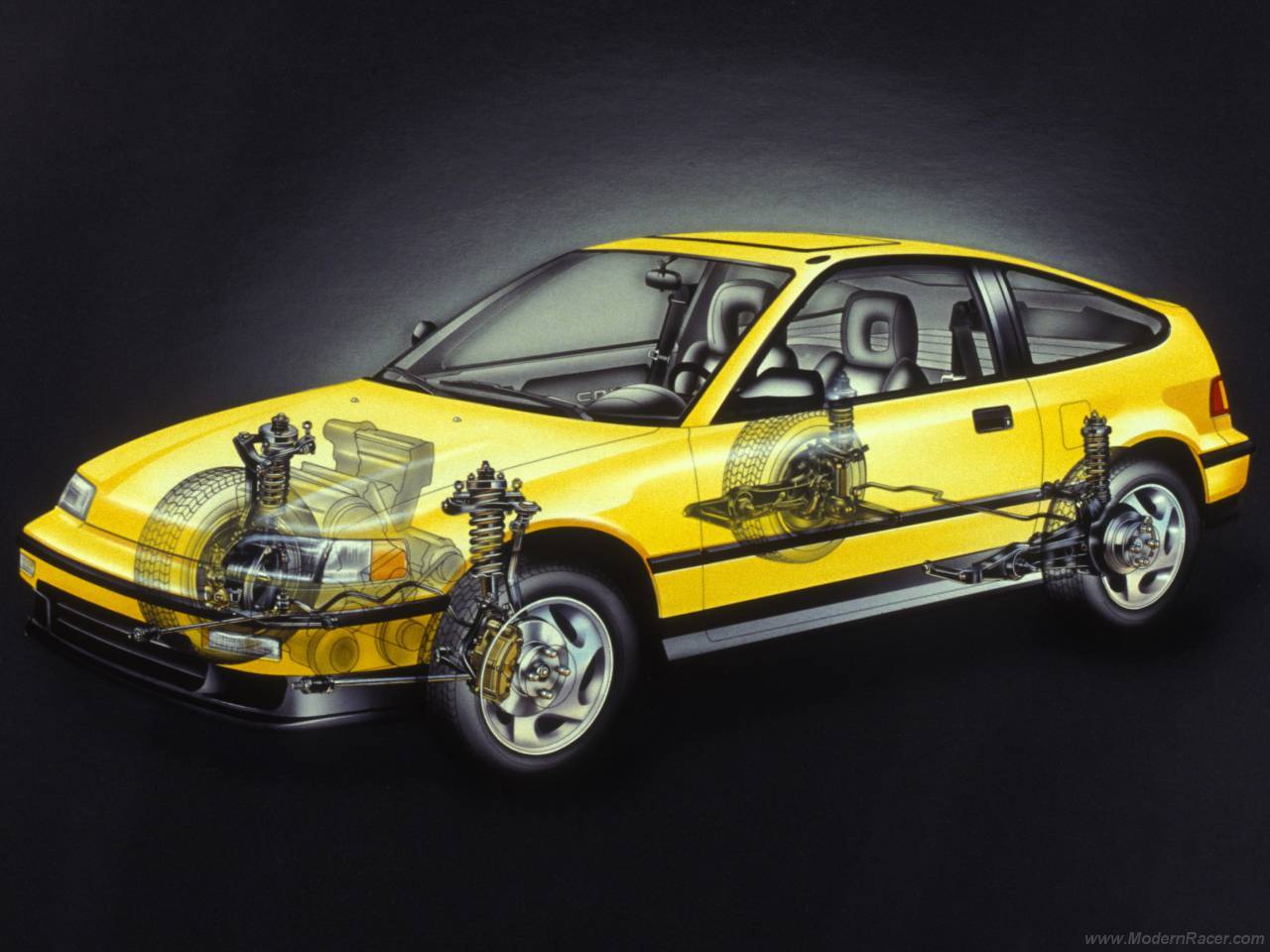
Double Wishbone Suspension Layout

The use of double wishbone suspension on all four corners in later models was uncommon in this class and provided a handling advantage. This setup allowed better camber control and improved tire contact under load, resulting in sharper turn-in and more predictable behavior during aggressive driving.
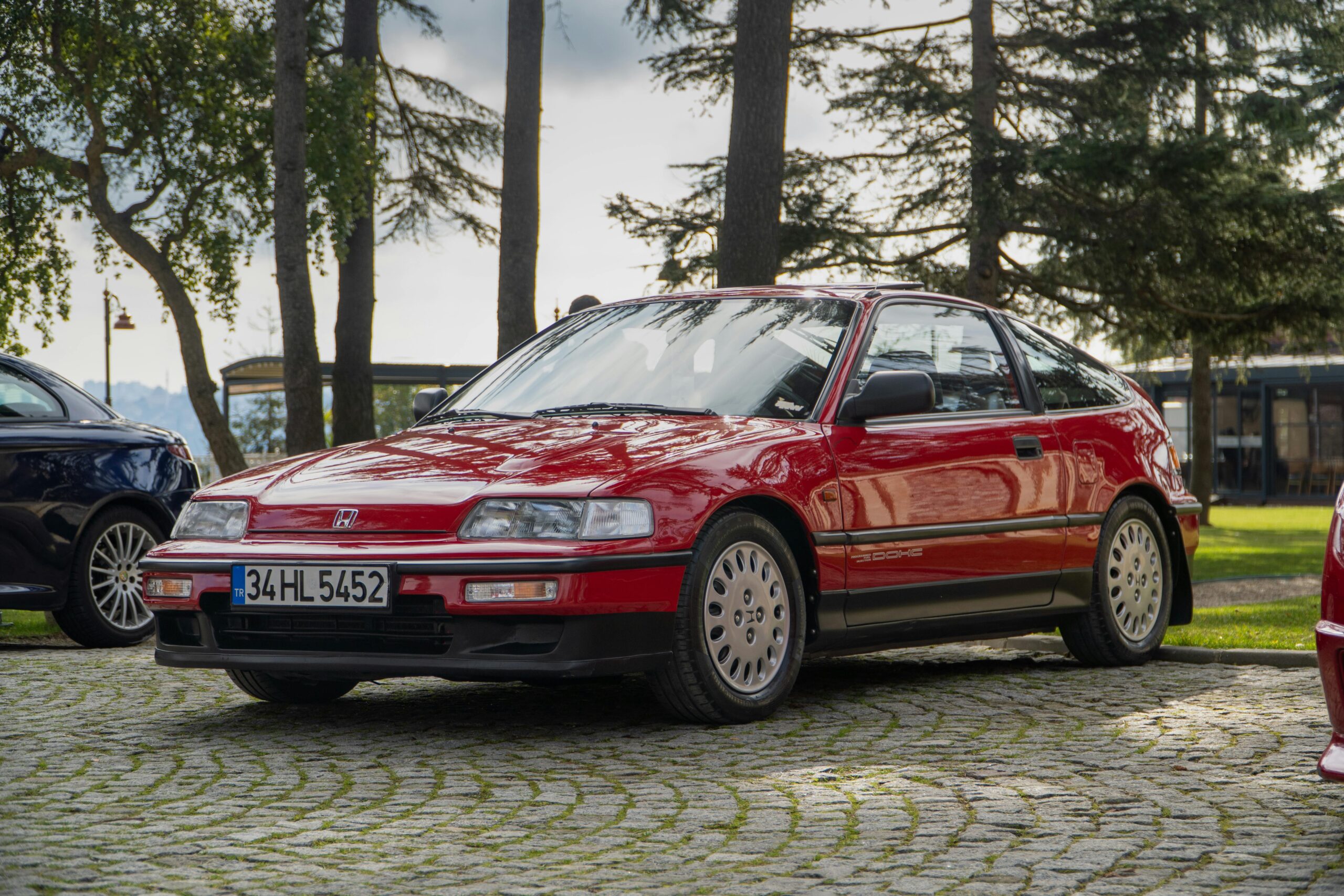
A vintage red Honda CRX VTEC parked outdoors on a cobblestone area, surrounded by trees, under a sunny sky.

High-Efficiency HF Model

The HF (High Fuel Efficiency) variant showcased Honda’s focus on economy, using optimized gearing, lightweight components, and efficient engine tuning to achieve excellent fuel economy. These models showed that performance and efficiency could coexist, setting a precedent before hybrid technology became mainstream.